
PROJECT PROFILE
Sift
In Development
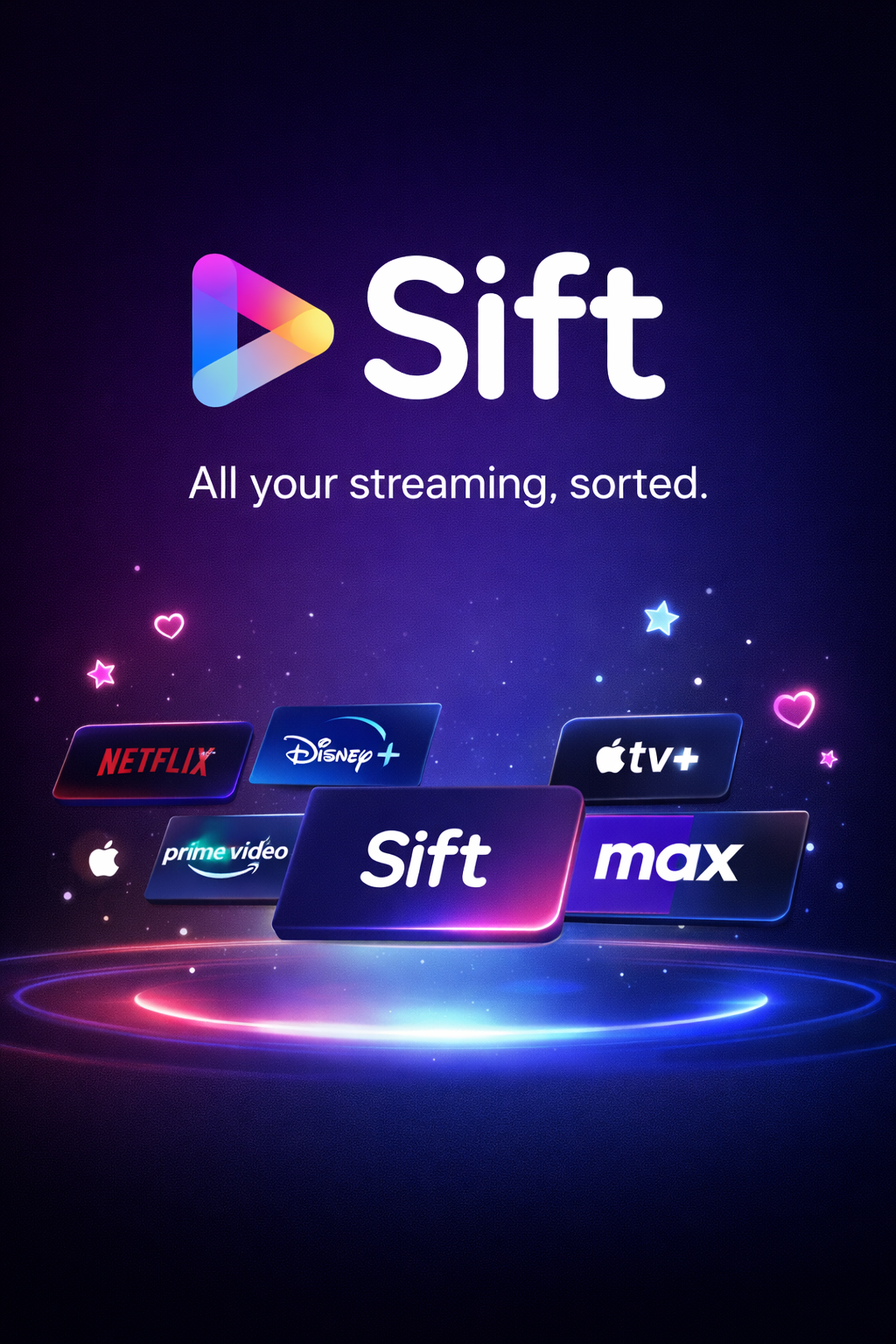
Sift is built for the moment when you know you want to watch something, but not which app to open first. It shows you what is actually available across your streaming services, cuts out dead-end browsing, and tells you exactly where a film or series is playing before you waste time hunting for it.
What problem it solves
Modern streaming is fragmented. Great titles are buried under autoplay rows, duplicate recommendations, and services you might not even subscribe to. Sift starts from your real setup. You tell it which services you have access to, and it filters discovery around what you can watch now, not what the wider internet happens to be promoting.
It also works in reverse. Search for a specific title and Sift answers the practical question immediately: where is it streaming, is it included, and which of your services already gives you access to it.
How the app feels
Sift is designed to feel less like a catalogue dump and more like a sharp, useful decision tool. Instead of pushing endless generic rows, it narrows the field intelligently: by service, mood, title, and what is genuinely available to you. That makes it useful both for spontaneous "what should we watch tonight?" moments and for those times when you already have a film or series in mind and just need the answer fast.
The goal is clarity. Open the app, see what is worth watching, and move straight into the service that has it. Less scrolling, less second-guessing, more actual watching.
Core features
- Service-aware discovery based on the streaming platforms you actually use.
- Title search that answers where a film or series is currently available.
- Results that distinguish included streaming access from rent or buy availability.
- Cross-service browsing so one search can replace opening five different apps.
- Fast shortlisting for group watch decisions, date nights, and casual evening browsing.
- A cleaner discovery layer that reduces algorithm fatigue and dead-end title hunting.
Why it stands out
Most entertainment apps either review content, track lists, or promote a single platform. Sift is focused on the practical gap between intent and playback: helping people move from "I want to watch something good" to "here is the best option on a service I already pay for."
That makes it useful as both a personal utility and a lightweight shared decision engine. It is less about building another media social network and more about removing friction from the final step that people care about most: finding something worth watching and getting to it quickly.